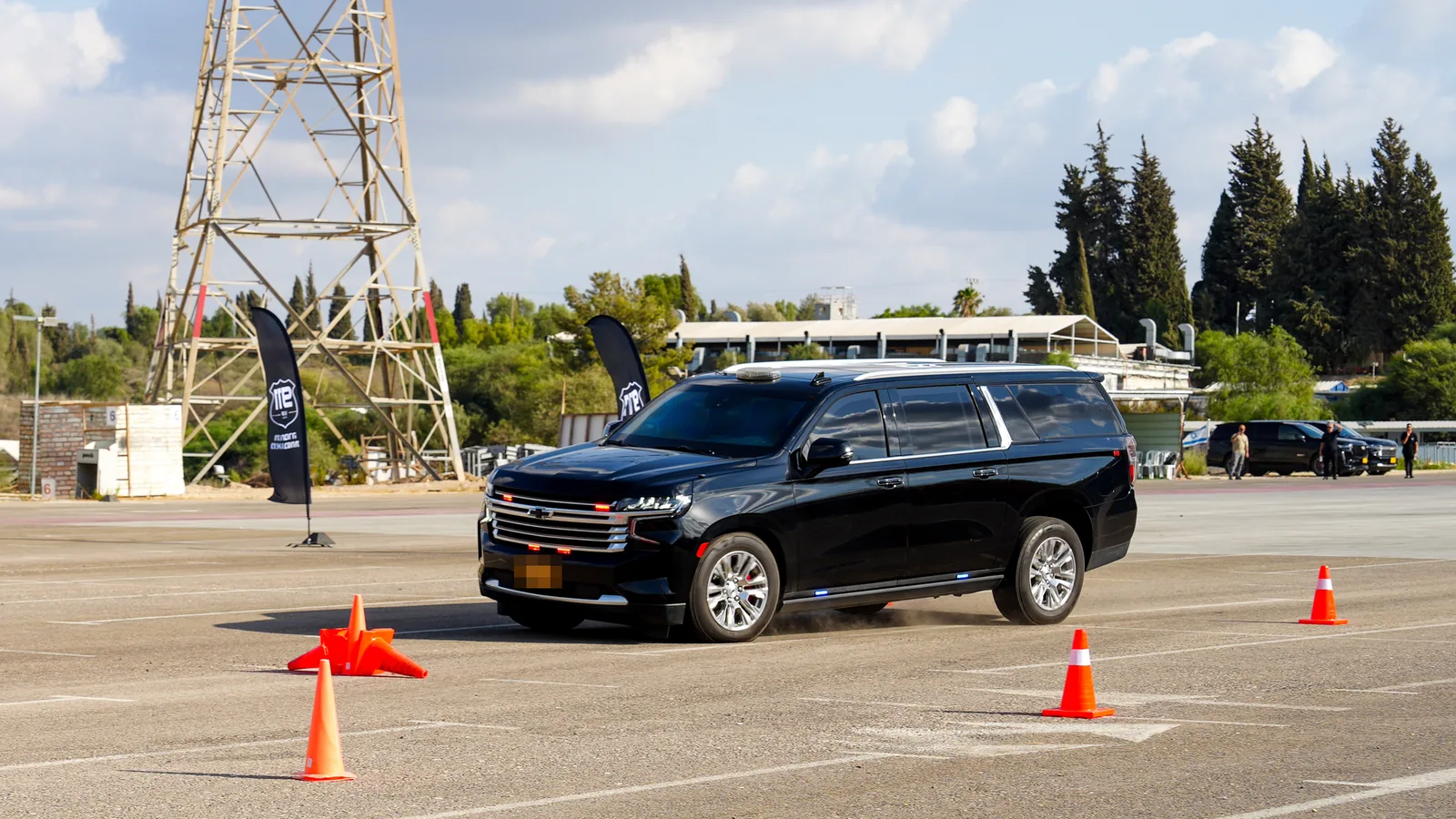
In short: an armored vehicle only protects its passengers if the person driving it knows how to use it. Armor adds a lot of weight and changes how the vehicle brakes, turns and maneuvers. That makes the driver almost as important as the armor itself, and it is why tactical driving is a separate skill, not just another license.
What armor changes behind the wheel
An armored vehicle can be 20 to 40 percent heavier than the car it started as, as we explain in how armored vehicles are built. The driver feels that weight in three ways:
- Braking. A heavier vehicle carries more energy at the same speed and needs more distance to stop. Upgraded brakes help, but they do not cancel the physics.
- Turning. Roof, door and glass armor all sit high up. Summit Point, an American driver training center, cites the "high center of gravity and added weight" as the reason basic vehicle control comes first in its courses.
- Maneuvering. A sharp swerve takes different planning in a heavy vehicle. In 2025 the Israel Police itself noted that the added weight in illegally armored cars harms steering and braking.
What armored vehicle driver training covers
Armored driving courses around the world return to the same subjects. Summit Point, for example, lists these in its course:
- Vehicle control: threshold braking, skid control and serpentine drills
- Evasive maneuvers
- Early threat recognition
- Scenario-based practice
The goal behind all of them is simple: get the passengers out of a dangerous situation by driving, not remain in it. An armored vehicle buys time, and the driver is the one who uses it.
How it works with us
Our drivers are highly experienced, security-cleared, English-speaking, and are graduates of advanced tactical driving programs. They undergo strict and periodic tactical driving training and certification to maintain peak operational readiness.
The photo at the top of this article was taken on our training course, and you can watch footage from the training on our About page. Training takes place in armored vehicles, on a course marked out with cones.
What to ask before booking an armored car with a driver
Whether you book with us or not, these are the questions to ask any provider:
- Who is the driver? Are they security-cleared, with dedicated training for armored vehicles?
- When did they last train? One course is not enough. Ask whether training is periodic.
- Which vehicle will arrive? Who armored it, and is it lawfully registered?
- What about approvals? With us, every trip is subject to prior approval by the Israel Police.
- Does the driver know the route? Knowing the road matters most in sensitive areas.
Frequently asked questions
Why not drive an armored car myself? An armored car behaves differently from a regular one, especially in an emergency, and in Israel you cannot hold one without meeting the rules. We explain them in can a private citizen own an armored car in Israel.
Do the drivers speak English? Yes. Our drivers are English-speaking, so the service suits guests and delegations from abroad.
How do I book? Leave your details and our representative will get back to you. Every trip is subject to prior approval by the Israel Police.
Sources
- Summit Point: Armored Vehicle Course: center of gravity, added weight and course content
- Auto (Hebrew): the police on how added weight affects steering and braking
- The Drive: Inside the armoring process: added weight in armored vehicles